
距截稿日期还有:
- 00 天
- 00 时
- 00 分
- 00 秒
EDUINNOV2026演讲嘉宾信息如下:
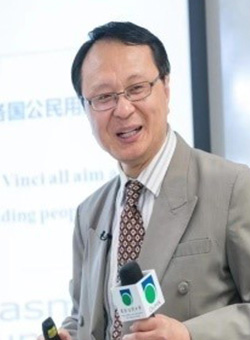
Dr. Shuo Zhao, Professor
School of International Studies, Communication University of China, Beijing, China
Biography: Dr. Shuo Zhao is Professor in Communication University of China (CUC) and Fellow of New York Academy of Sciences while he is guest professor/PhD Superviser in University of Malaya(UM), University of Wales Trinity Saint David(UK). He also serves as Editor-in-Chief of American Journal of Linguistic Science and Literature as well as guest editor for special issue of SSCI Journal Systems. He is awarded as Humanity Scholar by American Common Ground Publishing and Imperial College London in 2017, by University of Pennsylvania in 2018. Recently he is awarded as international humanity Scholar by Universidad Complutense of Spain in 2021, international humanity Scholar by University of Aegean of Greece in 2022, international humanity Scholar by University of Sorbonne of France in 2023, international humanity Scholar by University of Rome of Italy in 2024, humanity Scholar by University of Hawaii in 2025.
Topic: AI Education Paradigm Transformation in the Context of the Global South
Abstract: The rapid penetration of artificial intelligence into education has intensified rather than bridged the North-South epistemic divide. The mainstream AI education frameworks, embedded with Western-centric biases, risk entrapping the Global South in algorithmic dependence and digital colonialism through data exploitation, infrastructural asymmetry, and the marginalization of Southern knowledge systems. The study calls for an urgent paradigm shift from the logic of technology transfer toward epistemic sovereignty. Drawing on de-colonial theory and critical AI studies, it proposes a de-colonial AI education paradigm grounded in epistemic sovereignty, relational learning and context-responsive design. Through three pillars of data justice, local knowledge production and participatory governance, the study offers both a diagnostic framework and constructive pathways toward a just, plural and self-determined AI education future for the Global South.

Dr. Lo Yueh Yea, Assistant Professor
Faculty of Education, Universiti Malaya, Kuala Lumpur, Malaysia
Biography: Dr Lo Yueh Yea is an Assistant Professor at the Faculty of Education, Universiti Malaya, whose academic work is anchored in language literacy education, TESOL, ESL, academic writing, pedagogy, and professional teacher development. Her scholarship examines how multilingual learners develop English language proficiency, academic voice, writing competence, and literacy practices across diverse educational contexts. With a strong focus on formative assessment, feedback, classroom-based pedagogy, and technology-enhanced learning, her work speaks directly to the evolving needs of English language education in an increasingly digital and innovation-driven era. Her research on AI-assisted writing assessment and human scoring judgment contributes to current debates on fairness, reliability, ethics, and the role of teacher expertise in educational innovation. Dr. Lo is also committed to professional teacher development through reflective practice, lesson study, and collaborative approaches to improving classroom instruction. By bridging language literacy, pedagogical innovation, teacher learning, and responsible AI integration, her work offers timely insights for educators, researchers, and policymakers seeking to strengthen teaching, assessment, and learning in the age of educational transformation.
Topic: Advancing Multilingual Education Through Feedback Literacy, Digital Pedagogy, and Professional Teacher Development for Equitable Futures
Abstract: In an increasingly multilingual, digital, and interconnected world, education systems must prepare learners not only to acquire English language proficiency but also to develop academic voice, literacy confidence, and meaningful participation in diverse knowledge communities. This keynote explores how multilingual education can be advanced through three interrelated priorities: feedback literacy, digital pedagogy, and professional teacher development. Drawing on perspectives from TESOL, ESL education, academic writing, formative assessment, and classroom-based pedagogy, the presentation highlights the importance of feedback that supports reflection, learner agency, and writing development. It also examines how digital tools and technology-enhanced learning environments can expand opportunities for personalised, inclusive, and responsive language learning. At the same time, sustainable educational transformation requires teachers who are professionally empowered to design effective pedagogies, interpret learners’ needs, and integrate innovation with critical awareness. By positioning teachers as curriculum designers, feedback facilitators, and agents of equity, the keynote argues for a more human-centred approach to educational advancement. Ultimately, the presentation calls for multilingual education that bridges linguistic development, pedagogical innovation, and social inclusion, offering pathways toward equitable futures for learners, teachers, and institutions across diverse educational contexts in the twenty-first century.

添加组委会微信
(王老师)
© 2015-2026第十一届教育与创新国际会议 版权所有
